- Men of Courage
- Metastatic cancer: The importance of being well supported – By Mario Ménard
Metastatic cancer: The importance of being well supported – By Mario Ménard

In the spring of 2014, at the age of 60, I experienced a sudden and unexplained loss of consciousness. My doctor then ordered a series of tests, which revealed, among other things, an elevated PSA level. My doctor referred me to a urologist who, after a biopsy, diagnosed me in November 2014 with a Gleason 7 prostate cancer.
After consulting with a radiation oncologist who supported my urologist’s recommendation, I underwent a radical prostatectomy in March 2015, which revealed, upon pathology, a Gleason 8 score.
Facing Recurrence
In January 2016, nine months after the radical prostatectomy, my urologist detected a recurrence with a PSA level too high to be controlled by radiotherapy. By August 2016, nine months into the recurrence, my PSA level had unfortunately risen to the point where bone metastases were detected in three locations, leading to the start of hormone therapy (chemical castration).
When PSA Keeps Rising
In August 2017, as my PSA level began to rise again, I opted for an orchidectomy (removal of both testicles), which was performed in early November 2017. I saw my urologist in August 2017, October 2017, and November 2017, and each time my PSA level had increased.
My wife, my children, my entire family, and I live this reality one day at a time. Since the diagnosis in November 2014, all the testimonials I have seen or read have been encouraging about successful outcomes following a radical prostatectomy or radiotherapy from an initial diagnosis or recurrence. However, I have not found testimonials or support groups for men experiencing the same reality as mine.
Fortunately, I am well-supported by a group of friends, work colleagues, our respective families, my wife, my children, and my grandchildren.
Conclusion
The Noeudvembre 2017 campaign, sponsored by PROCURE, is very important to us. My daughter signed up as an ambassador for the 2017 campaign. The attached photo to my testimony shows me surrounded by my close circle.
I will conclude by saying that this reality must be faced one day at a time, with strong support, and with hope that research will eventually overcome this insidious disease.

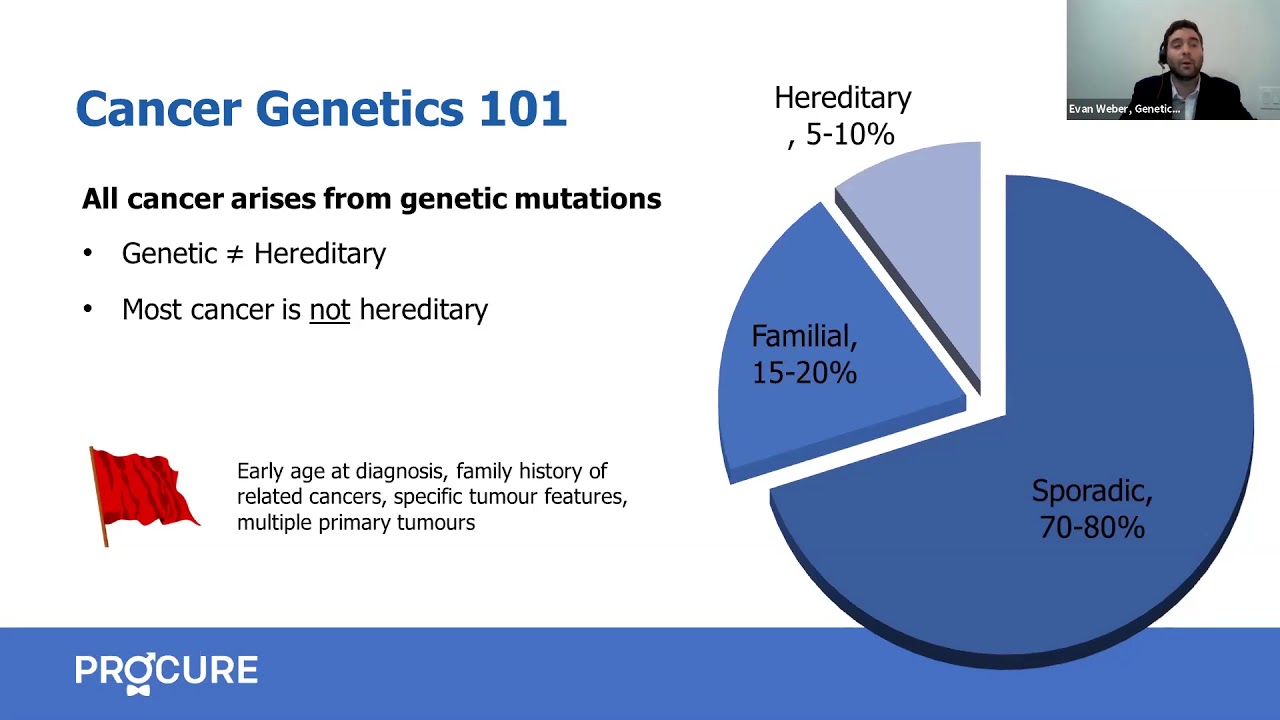
Is prostate cancer hereditary?
Understanding the hereditary and genetic aspects of this disease can provide valuable information to both individuals affected and their families.
Symptoms, risk and screening
Are you over 50 or experiencing urinary problems? Discover why early screening for prostate diseases is important.
Genetics and prostate cancer
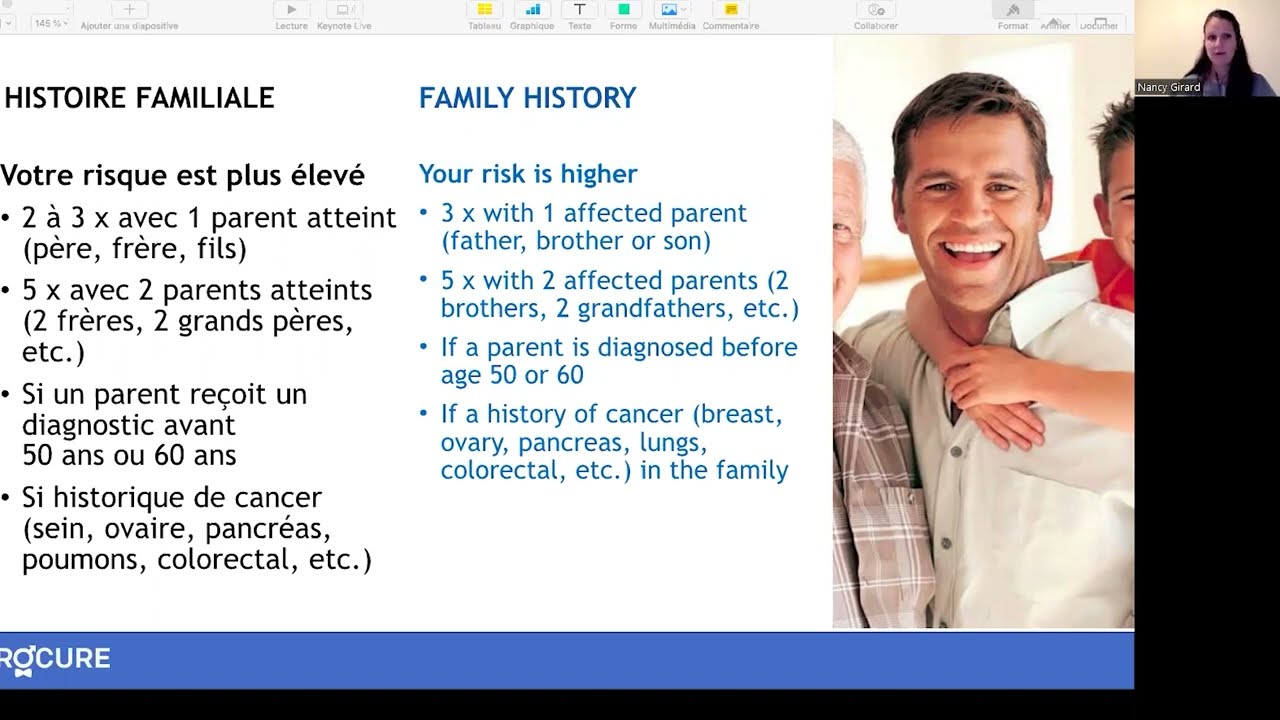
Do you have a family history of cancer? Your doctor might recommend genetic screening.
Genetic predisposition to prostate cancer
Although rare, some hereditary genetic mutations can increase your risk of prostate cancer.
From prostate to screening
Learn about the role of your prostate, related diseases, symptoms to watch out for and risk factors.
Vitamin D deficiency may be linked to aggressive prostate cancer
The Benefits of Vitamin D A great amount of research present the multiple benefits of Vitamin D. For example, Vitamin D regulates the amount of calcium and phosphorus, helps build bones and brings many more benefits to other tissues in the body, including kidneys, intestines and parathyroid glands. In fact, past reasearch found a link […]
Are you at risk? What causes prostate cancer?
The exact causes of prostate cancer are not yet well understood. Researchers have found some risk factors and are trying to determine how these factors lead to prostate cancer.
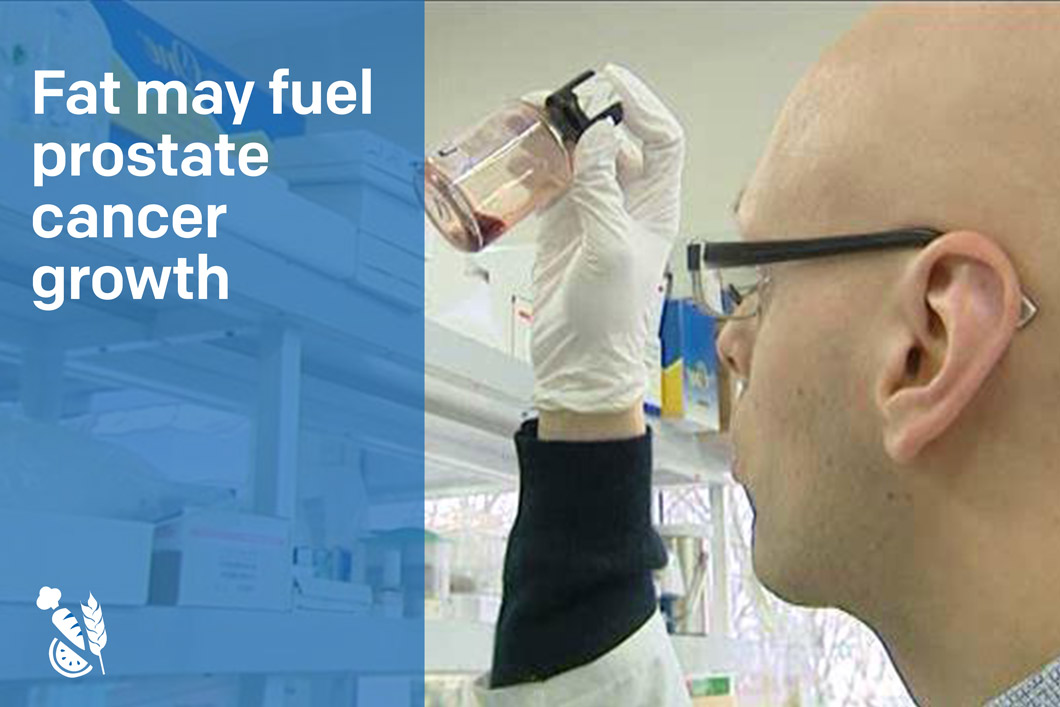
Fat may fuel prostate cancer growth
Being overweight or obese may increase a man’s risk of aggressive prostate cancer, researchers believe after doing animal and human cell studies.
Inherited Predisposition and Prostate Cancer
“My father got prostate cancer when he was 54. My elder brother got it at 52. And I got it at 56, despite my healthy habits.”
Sources and references
Last medical and editorial review: April 2024. See our web page validation committee and our collaborators by clicking here.