

Be sure to take the time to think about what is good for you and to get all the information you need. You will have an informed discussion with your doctor and choose the treatment option that is right for you.
You should also be aware that research is now providing increasingly precise treatments that target specific forms of cancer. In addition, treatment protocols now include many strategies to treat advanced disease.
Active surveillance refers to close monitoring of your prostate cancer. Depending on your age and state of health, this option may be right for you if your tumor is small, detected at an early stage with a low risk of progression, and does not put your life at risk.
Regular checkups are scheduled every 3 to 6 months and usually include a digital rectal exam (DRE), prostate‑specific antigen (PSA) test, and repeat prostate biopsies.
Radical prostatectomy is a surgical procedure that involves the complete removal of your prostate and seminal vesicles for the purpose of curing cancer. Surgery is suitable for patients who are otherwise healthy and whose disease is thought to be confined to the prostate. If your cancer is at high risk of progression, the surgeon will remove your lymph nodes near your prostate (in the pelvis).
This procedure is normally used to relieve urinary obstruction symptoms caused by an increase in the volume of your prostate exerting pressure on your urethra. This surgery is used for men with advanced prostate cancer or for men who are not healthy enough to undergo a radical prostatectomy. This surgery does not cure cancer.
The use of external beam radiotherapy is to eradicate cancer cells in the prostate from a device (linear accelerator) placed close to your body. It is given for the purpose of curing cancer when it is confined to the prostate. Radiation therapy is usually combined with hormone therapy for cases of high-risk prostate cancer.
Brachytherapy is the use of radioactive material placed directly in the prostate to destroy cancer cells. There are two types of brachytherapy: low dose rate brachytherapy requires the implantation of permanent radioactive seeds in the prostate. This is usually only an option if the cancer is at a relatively early stage and slow-growing (such as low-grade tumors).
High dose rate brachytherapy involves temporarily inserting a radioactive source directly into the prostate using catheters connected to a radiation source. In cancer at higher risk of progression, brachytherapy may be associated with external beam radiotherapy.
Hormone therapy involves removing, suppressing, or blocking your male hormones, such as testosterone, which hinders the growth and spread of your cancer. Hormone therapy treats your entire body rather than just targeting your prostate. It is used to treat cancer that has spread beyond the prostate. It can be administered “intermittently” or “continuously”.
The main hormonal therapy modalities for prostate cancer are in the form of injections or implants to stop your testosterone production or tablets to block the effects of testosterone.
Standard hormone therapy has been used for many years in the treatment of prostate cancer. However, in recent years, multiple new therapies commonly grouped as second-line hormone therapy (new generation) have been approved in Canada.
Thus, cancer – which no longer responds to standard hormone with nos metastasis – could be treated with new-generation hormone therapy in the form of tablets – apalutamide (Erleada), enzalutamide (Xtandi) or darolutamide (Nubeqa). If your cancer progresses despite these treatments, your doctor may recommend a combination of treatments approved by Health Canada or available through clinical trials.
Chemotherapy can destroy cancer cells that have spread to other parts of the body. It can be used at diagnosis of metastatic prostate cancer or when hormone therapy is no longer effective (castration-resistant prostate cancer). It can also be used to relieve the pain and symptoms of generalized (metastatic) prostate cancer. Chemotherapy can be used in combination with other therapies.
The main modalities for prostate cancer are in the form of injections (infusion) in a hospital, with one to three treatments every three weeks lasting about 30 minutes per treatment.
Next-generation hormone therapy – apalutamide (Erleada), enzalutamide (Xtandi), and abiraterone acetate (Zytiga) – are also new agents in the therapeutic arsenal for the treatment of metastatic cancer, according to medical indications approved by Health Canada.
When prostate cancer spreads to other parts of the body, it spreads mostly to the bones. Your doctor can use a variety of treatments to help prevent the spread of cancer to the bones or to treat metastases (as mentioned above), to strengthen the bones and to alleviate the pain and discomfort caused by bone metastases. Treatment to relieve symptoms and improve quality of life will be implemented.
Regular follow-up visits are important, especially during the first 5 years after treatment.

Understanding the hereditary and genetic aspects of this disease can provide valuable information to both individuals affected and their families.

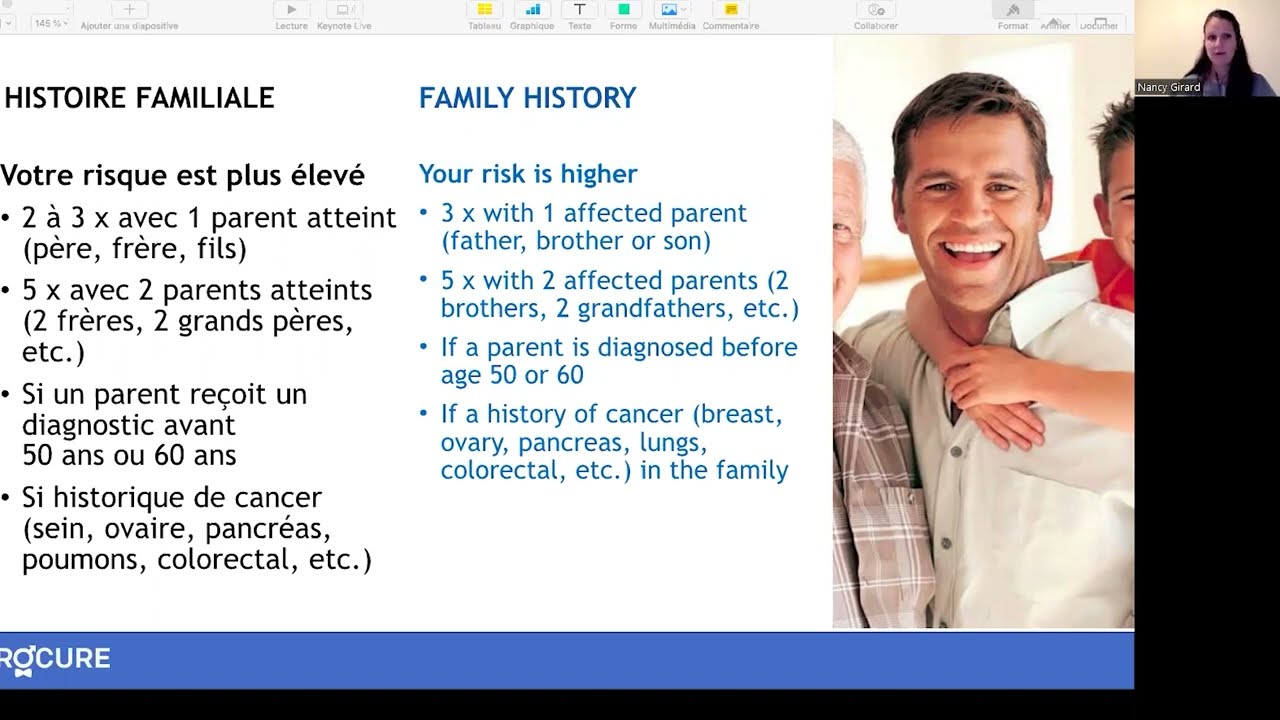
Do you have a family history of cancer? Your doctor might recommend genetic screening.

Are you over 50 or experiencing urinary problems? Discover why early screening for prostate diseases is important.
Learn about the role of your prostate, related diseases, symptoms to watch out for and risk factors.
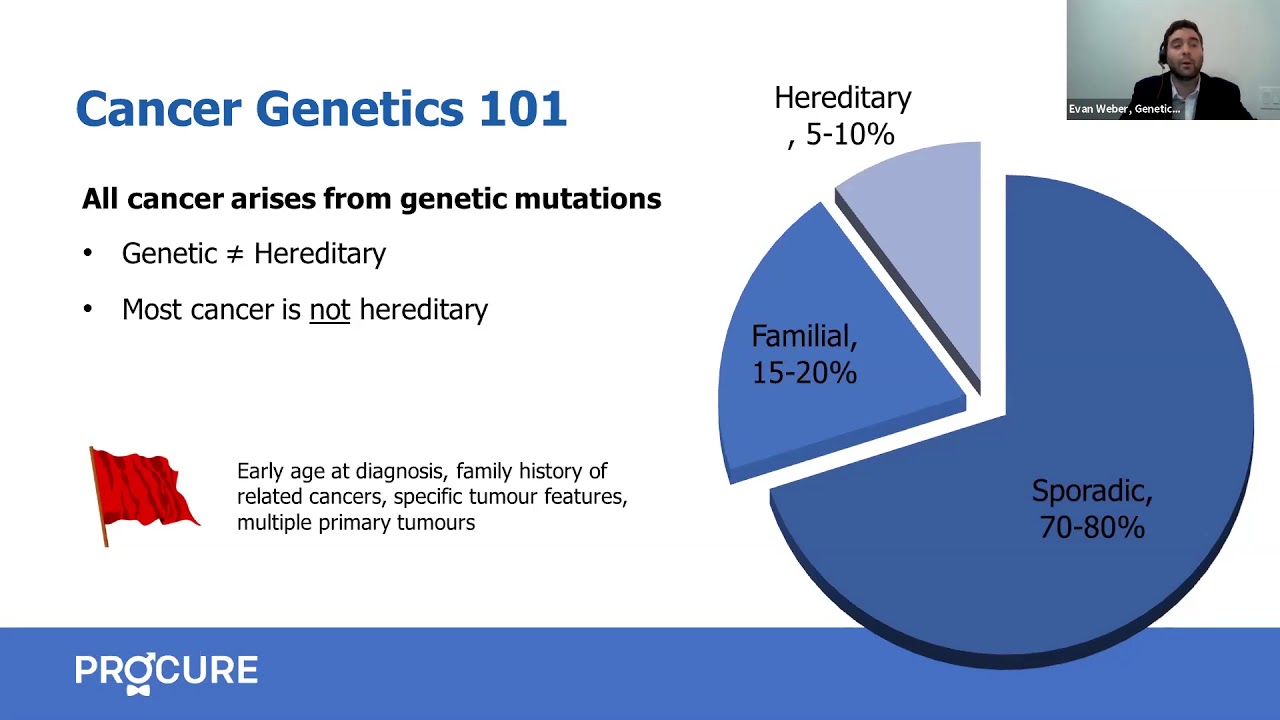
Although rare, some hereditary genetic mutations can increase your risk of prostate cancer.

Is your penis curved? Does it curve to the left, right, upward, or downward? You have a curved penis and you or your partner want to know why?

How to prevent BRCA-related prostate cancer? Can I have a radical prostatectomy or a proactive treatment to prevent prostate cancer?

Do you have a significant family history of cancer? Is there a link between prostate cancer and a genetic mutation?

While sore balls are a common experience and usually no cause for concern, it’s important to familiarise yourself with symptoms in case it’s a sign of something serious.
Sources and references
Last medical and editorial review: April 2024. See our web page validation committee and our collaborators by clicking here.