Approved drugs
Approved drugs
Treatments may aim to cure prostate disease or to halt or alleviate symptoms. You may receive a single treatment or a combination of treatments depending on your specific disease or symptoms, your age, and your overall health. Regarding prostate cancer, treatment will be based on the stage and grade of the disease you have, in other words, on the extent and pace of cancer spread.
This section provides information on medications currently approved by Health Canada. We will update this page as Health Canada approves new molecules for the treatment of prostate-related diseases, including cancer.
Drugs used in hormone therapy
The most common LH-RH analogues are:
- Leuprolide (Lupron, Lupron Depot, Eligard)
- Goserelin (Zoladex)
- Buserelin (Suprefact)
- Triptorelin (Trelstar)
The LH-RH antagonists are:
- Degarelix (Firmagon)
- Relugolix (Orgovyx)
The most common anti-androgens are:
- Bicalutamide (Casodex)
- Flutamide (Euflex)
- Cyproterone acetate (Androcur)
- Nilutamide (Anandron)
New generation of hormone therapy
- Abiraterone acetate (Zytiga)
- Apalutamide (Erleada)
- Enzalutamide (Xtandi)
- Darolutamide (Nubeqa)
Medications used in chemotherapy
- Docetaxel (Taxotere)
- Cabazitaxel (Jevtana)
- Mitoxantrone (Teva)
- Prednisone or Prednisolone
Medications used to treat symptoms related to bone metastases
- Denosumab (Xgeva)
- Zoledronic acid (Zometa)
- Alendronate (Fosamax)
- Pamidronate (Aredia)
Targeted therapies
- Olaparib (Lynparza)
- Niraparib/Abiraterone acetate (Akeega)
- Radium-223 dichloride (Xofigo)
- Lutetium (177Lu) (Pluvicto)
Nuclear imaging
- 68Ga PSMA PET (Illuccix)
5-α-reductase inhibitors
- Finasteride (Proscar)
- Dutasteride (Avodart)
α-blockers
- Tamsulosin (Flomax)
- Alfuzosin (Xatral)
- Silodosin (Rapaflo)
- Terazosin (Hytrin)
- Doxazosin (Cardura)
Anticholinergics
- Oxybutynin (Ditropan®) & (Ditropan XL®)*
- (Oxytrol®)*
- (Uromax®)
- Oxybutynin chloride gel (Gelnique®)
- Tolterodine (Detrol LA®) & (Detrol®)*
- Trospium chloride (Trosec®)
- Solifenacin (Vesicare®)
- Darifenacin (Enablex®)
- OnabotulinumtoxinA (Botox®)
- Fesoterodine (Toviaz®)
- Mirabegron (Myrbetriq®)
Tricyclic antidepressants
- Imipramine (Tofranil®)
*Most prescribed medications
Fluoroquinolone – Quinolone
- Ciprofloxacin (Cipro®) & (Cipro XL®)
- Levofloxacin (Levaquin®)
- Norfloxacin (Norflox®)
- Ofloxacin (Oflox®)
- Ampicillin
Sulfonamide
- TMP-SMX (Septra DS®)
- TMP (Apo-Trimethoprim®)
Others
- Nitrofurantoin (Macrobid®)
- Nitrofurantoin (Novo-Furantoin®)
β-lactams
- Amoxicillin-clavulanate K (Clavulin®)
Cephalosporins
- Cefadroxil (Duricef®)
- Cefprozil (Cefzil®)
- Cephalexin (Cephalexin®)
Erectile dysfunction
Inhibitors of phosphodiesterase type 5 or PDE-5
- Tadalafil
- Vardenafil
- Sildenafil
Penile injections
- Caverject
- TriMix
- QuadMix
MUSE Applicator*
*Out of stock in Canada
Additional Information - Treatment options
External radiation or Brachytherapy?
Explore the benefits and considerations of each treatment option for prostate cancer to determine which might be right for you.

Radical surgery with Kevin Zorn
Learn about robotic radical surgery for prostate cancer and whether it is an option for you.
What happens after my diagnosis of prostate cancer ?
The diagnosis of prostate cancer greatly influences the choice of treatment. Indeed, the results of the biopsy and the different tests and scans measure two key indicators: the grade and stage of prostate cancer. The grade determines the degree of aggressiveness of the cancer while the stage indicates the degree of spread. Both indicators are […]

What are the prostate cancer treatment options?
There are several treatment options available for patients suffering from prostate cancer. The doctor adapts the treatment plans to meet the unique needs of each person and determines which option will lead to the most optimal results. Treatment should therefore take account of the progress of the disease, health status, age, opinions, preferences and expectations […]
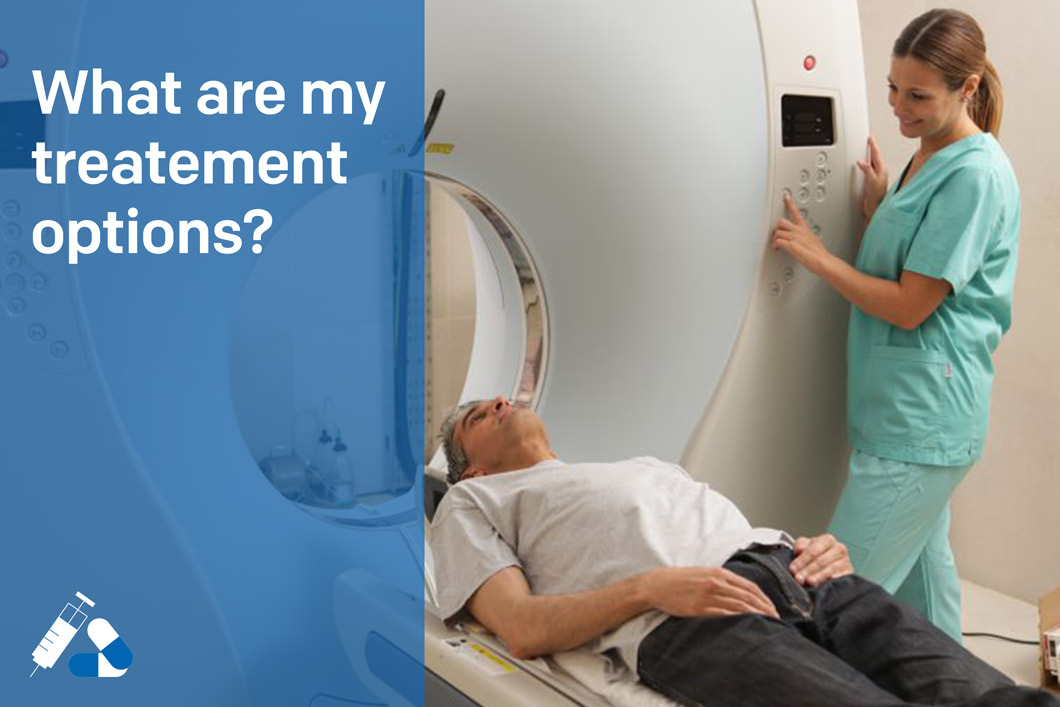
What are my treatment options?
Under 70 years old Men in their fifties or sixties are more likely to die from prostate cancer than older men because the disease has more time to evolve or reappear. It is therefore very important to treat the cancer as soon as possible. In general, when the prostate cancer is localized, the most effective […]
Sources and references
Last medical and editorial review: April 2024. See our web page validation committee and our collaborators by clicking here